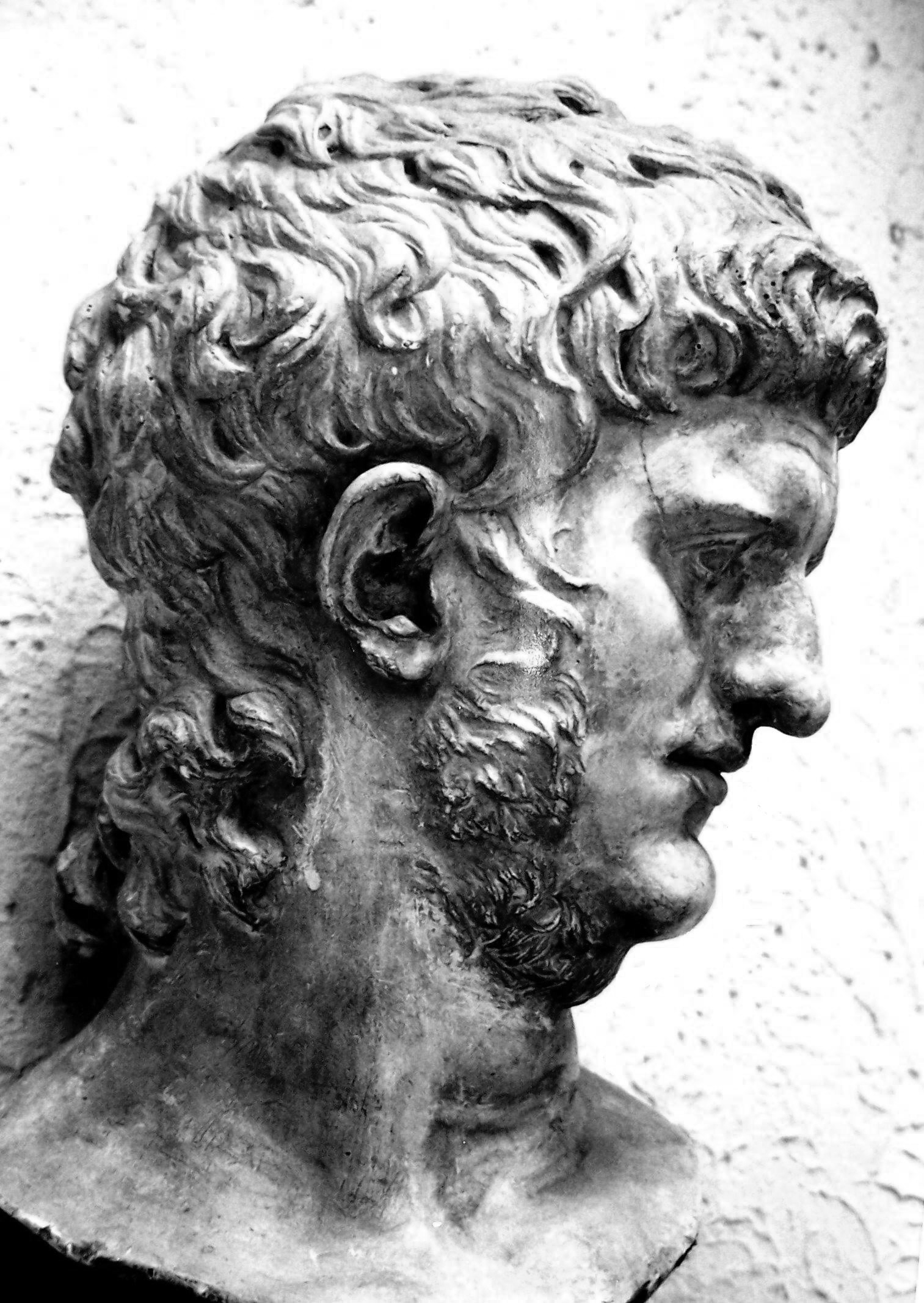
Few things are more pathetic than a would-be dictator craving or demanding praise he did not earn and does not deserve. Roman emperor Nero (reigned AD 54–68) is an archetype of such pathology. First-century Roman historian Suetonius, in his book THE TWELVE CAESARS, records this (and much more) of Nero’s life:
Nero began his reign with mercy and generosity, lowering taxes and awarding gold pieces to everyone in Rome. But need for constant attention soon overtook him. He co-opted cultural events in the imperial capital, sponsored chariot races, staged plays, organized music contests, and put on gladiatorial events. He pumped up his ego by demanding extravagant loyalty, and cruelly mistreated perceived enemies.
Tiridates, king of Armenia, aligned his nation with Rome and came to visit Nero. Tiridates “had to walk up a ramp and then prostrate himself in supplication.” Imagining that he had wondrously ended wars, Nero closed the double doors of the Temple of Janus (god of beginnings and endings) and declared that all war was at an end.
Nero’s voice was “feeble and husky,” but he gave public musical performances at which he had banks of youth organized to applaud. He toured Greece to sing and play lyre to audiences who did not dare leave early. Women gave birth in the stadium rather than risk departure while Nero sang. A mediocre musician, the emperor “won” every available prize for lyre-playing. “The Greeks alone are worthy of my efforts,” chortled Nero, “they really listen to music.”
Nero fancied himself a charioteer, and entered professional races. On one occasion he fell from the chariot and had to be helped up. He did not finish the race but still “won” the race.
Nero raped a Vestal Virgin and was a pedophile who married the boy Sporus. He built an enormous entertainment palace he called the “Golden House,” divorced several wives, ignored and eventually killed his tutor/advisor Seneca.
Describing himself in superlatives, Nero “boasted that no previous sovereign had ever realized the extent of his power.” Refusing to be constrained by the courts or legislature, he hinted that he “would one day wipe out the whole Senatorial Order.”
Christians—at that point still a countercultural movement—became Nero’s target. He tortured and killed hundreds, probably including the apostles Paul and Peter.
Modern historians are skeptical about some details that Suetonius presents. But it’s clear Nero “flooded the zone” with cruelty and misrule. After fourteen years the Roman army and Senate finally acted. Parts of the military revolted. Nero’s bodyguard deserted him. The frightened emperor fled to the outskirts of Rome.
The Senate declared him “public enemy,” and ordered that he be stripped naked and flogged to death. Vain and deluded to the end, Nero was heard to mutter, “Dead! And so great an artist!” As cavalry approached for the capture, Nero committed suicide.
WHAT IF I ever live in a country where a ruler claims prizes he did not earn and demands allegiance he does not deserve? What if such a ruler transgresses moral norms, ignores the law, and turns cruel or vindictive?
I hope that like Christians in Rome under Nero, I would be so clearly non-compliant that others would notice. I would not seek martyrdom, but I would give my allegiance to Jesus. I hope I would join others in crying out for justice and standing in solidarity with vulnerable people targeted by a tyrant.
_______________________
For full discussion of how Nero and other Roman rulers are portrayed in the New Testament, see my book APOCALYPSE AND ALLEGIANCE: WORSHIP, POLITICS, AND DEVOTION IN THE BOOK OF REVELATION (Baker).
 Holy Lands Peace Pilgrim