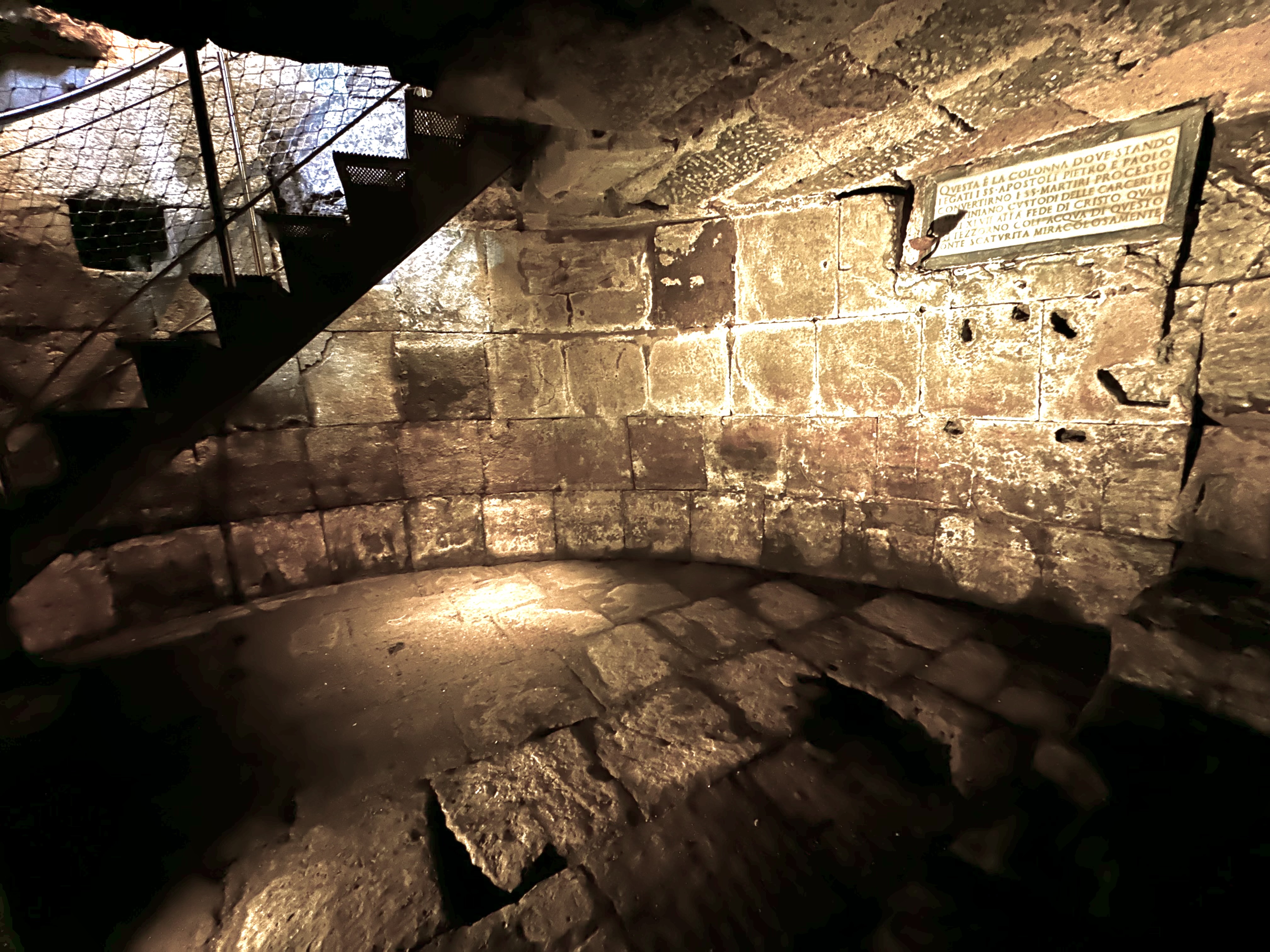
In the spring of 2025, I had the opportunity to descend into a dungeon in Rome where both Paul and Peter by tradition were imprisoned before execution in AD 64. This “Mamertine Prison” probably dates to the seventh century BC. Countless political prisoners and other targets of imperial wrath spent their last days here.
Modern Christians pondering how to respond to government authorities often cite two biblical passages. I offer my perspective on these, then add a third usually not considered:
+++++++ ROMANS 13: 1-7: Paul is at Corinth when he writes this letter to Christians at Rome. He is anticipating a politically dangerous trip to Jerusalem before making his first visit to the imperial capital (Rom 15:22-29). He’s optimistic that Roman authorities—maybe even members of the imperial court—will be receptive to the gospel. After all, in various situations Roman or provincial authorities have looked out for his safety (Acts 19:31, 21:31-32).
Paul sometimes had been able to share the gospel with such government representatives. It was Jewish opponents who were the biggest threat. When Paul arrived at Jerusalem for the last time, his presence triggered a riot among fellow Jews (probably including Christians).
Roman soldiers put him in protective custody where he awaited trial for disturbing the peace. The apostle appealed his case to the Roman emperor. Had he not done so, he could have been a free man (Acts 26:30-32). Paul WANTED to go to Rome.
No wonder Paul wrote optimistically in Romans 13 about government authorities! Authorities “that exist have been instituted by God.” Don’t resist. The government is there for your good. It is God’s servant. Government “does not bear the sword in vain.” Pay taxes. Honor rulers.
+++++++ 1 PETER 2:13-17: 1 Peter in its current form probably took shape after Peter’s death in AD 64. The author writes from Rome to far-flung believers in the country we call Türkiye. Emperors Nero (reigned AD 54-68) and Domitian (AD 81-96) both became erratic and were cruel to Christians and many others. Both were narcissists who reveled in being worshipped as divine. The entire letter of 1 Peter reflects suffering, marginalization, and abuse—a “fiery ordeal” (4:12).
So, why does Peter say, “accept the authority of every human institution”? Followers of Jesus, he specifies, shall “Honor everyone. Love the family of believers. Fear God. Honor the emperor” (2:13-17).
Embedded in this counsel is critique of Roman imperial ideology. Christians shall “accept the authority of every HUMAN institution,” Peter says, not claims to divinity. Christians shall “Honor everyone” AND “Honor the emperor” (2:17), effectively putting the emperor on the same plane as commoners.
Peter’s strategy in a difficult political environment is that Christians—even enslaved believers—keep a low profile and fit into established social and political structures. This presumably was to avoid unwanted attention (2:12, 18; 3:13). He inserts a rebuke at the end of his letter by referring to Rome as “Babylon” (5:13), the abhorred city that destroyed Jerusalem in 586 BC. (The book of Revelation does the same).
++++++ TO STATE THE OBVIOUS, Paul wrote the book of Romans before the Roman government turned on him and killed him. Would he have written the same knowing the final cruelties of Nero?
The book of 1 Peter subtly challenges Roman imperial ideology. It counsels compliance as far as possible with established institutions of society. Since the “end of all things is near” (4:7), Christians shall endure what is happening in government and society and focus on building up the Christian community (4:8-11).
++++++ REVELATION 13: The last book of the New Testament probably appeared in about AD 96. If the political context was in flux when 1 Peter circulated, it now has shifted dramatically. Rome has killed Peter and Paul, destroyed Jerusalem (hence, the “new Jerusalem”), unleashed warfare and famine (6:1-8), and orchestrated world-wide worship of the emperor.
Instead of being “God’s servant,” Rome now is “a beast rising out of the sea” (Rev 13:1). Followers of Jesus should expect to be killed, but shall remain nonviolent (13:9, 10). The author of Revelation evidently resisted the blasphemies of Rome, because he appears to be in exile.
+++++++ SO, WHICH BIBLICAL PASSAGE do we turn to when deciding how to respond to government misrule? It will not suffice to always go to the same verses (such as Romans 13). We need to discern our CONTEXT and take counsel from biblical authors who lived in similar circumstances.
If an emperor becomes a pathological liar, invades foreign countries, empowers the richest people of society (including himself), abuses the environment, sends thugs out to arrest sojourners, claims to be divinely anointed, sexually assaults women, and manipulates religion for self-serving agenda, he has become beastly. Christians in that case need to draw from the whole of biblical witness—including Revelation 13—in deciding how to respond.
+++++++
Thanks to Roger Shenk for raising questions that I attempt to address above!
 Holy Lands Peace Pilgrim