We should not be surprised when a ruler who grasps for absolute power also accumulates obscene wealth. No one in the New Testament era exemplifies that pattern more than Emperor Caesar Augustus (27 BC—AD 14). This is the ruler who issued a decree that “all the world should be registered” for taxation and control purposes (Luke 2:1).
It is difficult to put a modern dollar amount on the wealth of Caesar Augustus, but he accumulated the equivalent of billions. The man personally owned Egypt after defeating Antony and Cleopatra at the battle of Actium in 30 BC.
Instead of making Egypt a standard Roman province with taxes going to the public treasury, Caesar directed funds from the conquered land into his private account. Egypt became the breadbasket of the empire, producing one-third of Rome’s grain. This gave Caesar Augustus enormous political leverage and unimaginable wealth.
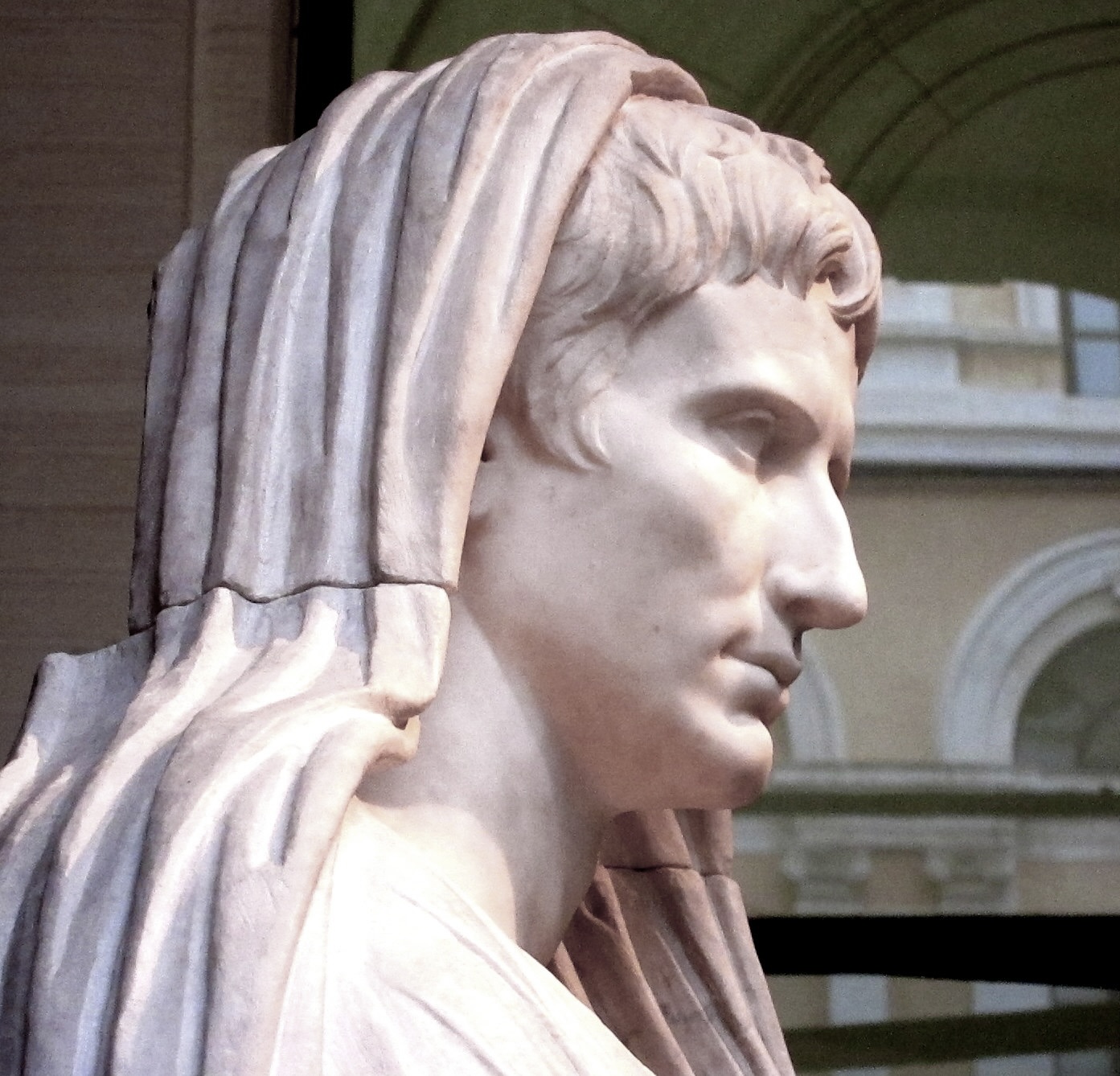
The emperor liked to project an image of piety, calling himself “Pontifex Maximus” (High Priest) of the empire. The attached picture portrays Augustus veiled, ready to perform sacrifice to the gods.
Taxing the poorest
Galilean peasants Joseph and Mary made the mandated journey to Joseph’s ancestral hometown of Bethlehem because Caesar Augustus wanted to tax them (and everybody else). The couple from Galilee lodged in a stable at Bethlehem where Mary gave birth and laid her newborn in a cattle trough.
When Mary dedicated her child at the temple, she brought a humble offering (Luke 2:24). Leviticus 12:8 says if the mother of a child being dedicated “cannot afford a sheep, she shall take two turtledoves or two pigeons.” Mary brought doves. From his palaces at Rome, Emperor Augustus wanted to tax these people.
A pay-to-play structure of power
Roman emperors of the New Testament era functioned as “patrons” at the top of an empire-wide patronage system. Senators, provincial rulers, and countless sycophants became “clients” of the emperor. These in turn became patrons for their own clients, creating a long chain of patron-client relationships from the top to the bottom of the Roman world.
This fostered a pay-to-play arrangement in which wealthy clients gained their patron’s favor by financing public works such as an aqueduct, government office building, or temple of emperor worship. Schmoozing engulfed the emperor, who could award “benefits” such as lucrative contracts or powerful offices to the most fawning.
Money eventually so corrupted the Roman government that in AD 193 the Praetorian Guard—having assassinated the reigning emperor—literally auctioned the office of emperor to the highest bidder.
God’s people pursue economic justice
In the face of rampant greed and conspicuous consumption, a rabbi from Nazareth spoke with direct counsel: “The kings of the Gentiles lord it over them,” he told his followers, “and those in authority are called benefactors. But not so with you . . .” (Luke 22:25, 26).
“No one can serve two masters,” he warned. “Do not store up for yourselves treasures on earth . . . For where your treasure is, there your heart will be also. . . You cannot serve God and wealth” (Matt 6:19-24).
Neither Jesus nor the early church were anti-business or against financial planning. But the Christian movement critiqued anyone who accumulated billions and aligned with the Apostle Paul who said, “the love of money is a root of all kinds of evil” (1 Tim 6:10).
Members of the earliest church at Jerusalem made all personal wealth available to others in the faith community so that there “was not a needy person among them” (Acts 4:32-35).
The prophet Isaiah–so influential on Jesus and the early church–said that the devotion that pleases God is “to loose the bonds of injustice . . . to let the oppressed go free . . . to share your bread with the hungry and bring the homeless poor into your house . . .” (Isa 58:6, 7).
++++++++++++++++++
Photo–taken at the National Museum of Rome–copyright 2014 by J. Nelson Kraybill.